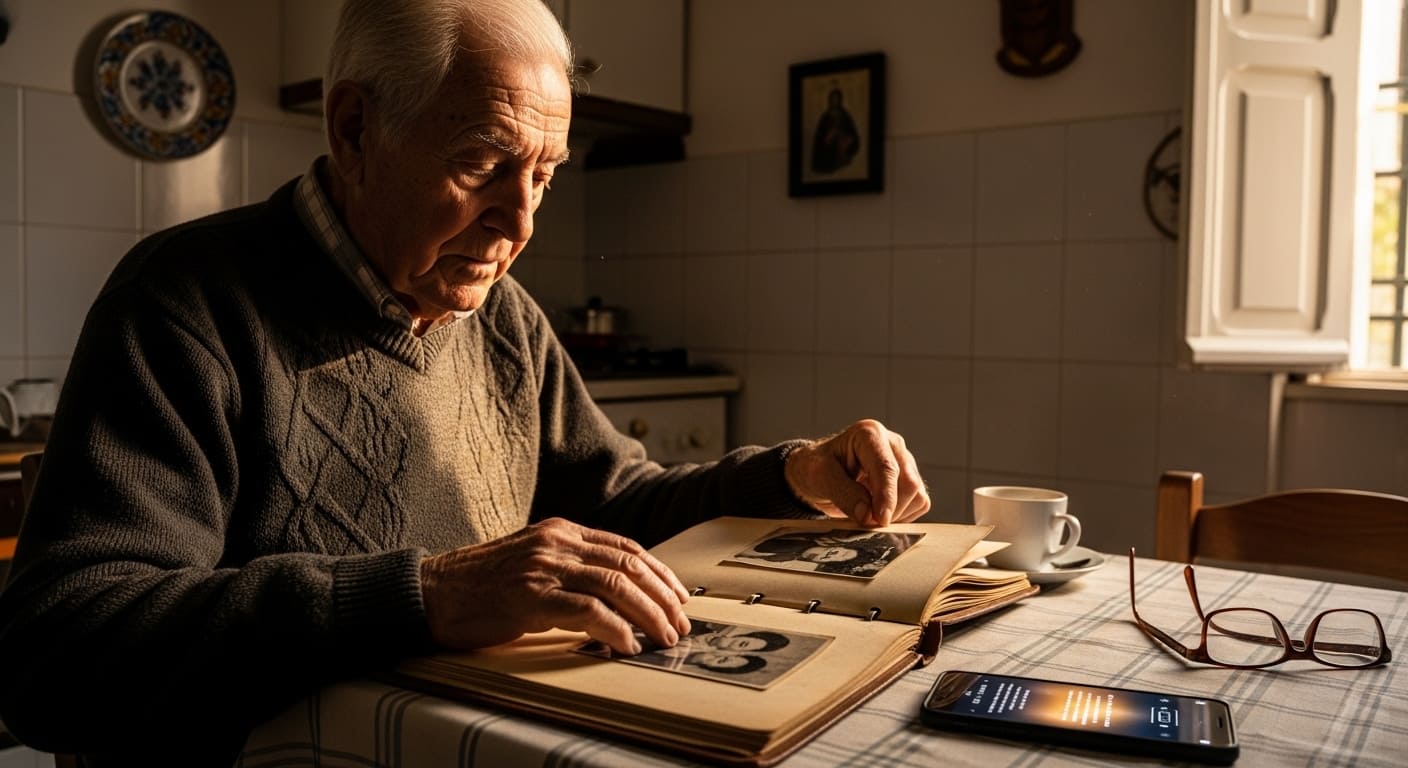
Memories are fragile. A photograph fades. A voice recording gets deleted. A story that only one person knew disappears when that person passes. And then it's too late.
Preserving the memories of those we love is not just a sentimental act — it's an act of responsibility towards future generations. Your grandchildren deserve to know who their great-grandparent was. Your children deserve access to the stories that shape the family's identity.
This guide presents the best methods to preserve memories permanently — digital and physical, free and paid.
Why memories fade faster than we think
Research in memory psychology shows that human memories are surprisingly volatile. Each time we remember something, we subtly alter that memory. Over time, details fade, stories gain different versions depending on who tells them, and eventually they disappear entirely.
Physical objects are no more reliable:
- ✓Printed photographs deteriorate in 20 to 50 years without special storage conditions
- ✓VHS tapes lose quality after 10 to 25 years
- ✓CDs and DVDs have a lifespan of 25 to 100 years — but the players disappear faster
- ✓Phones break, get lost, and the photos were never transferred
The only truly permanent way to preserve memories is digital — with multiple copies, on platforms designed to last.
Method 1 — Digital memorial (the most complete)
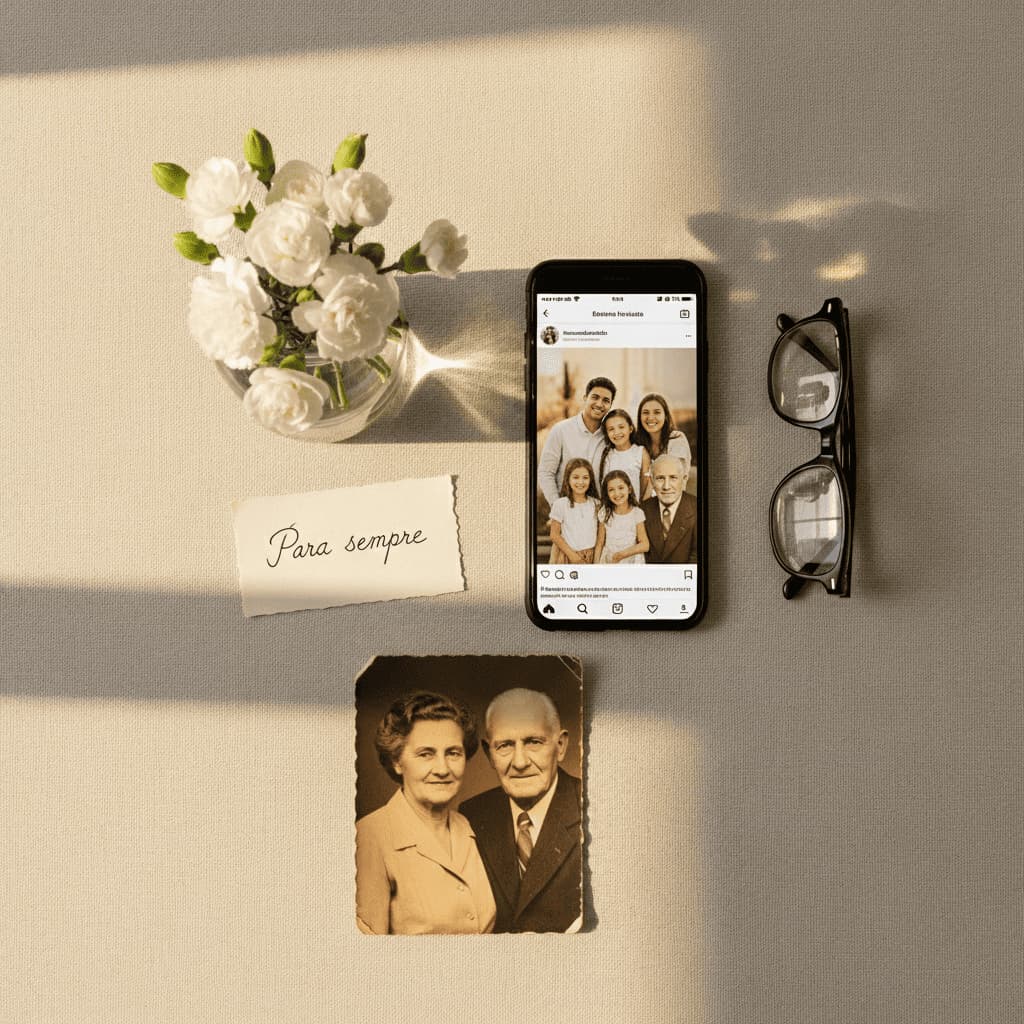
A digital memorial is the most comprehensive method for preserving memories because it combines everything in a single space: photographs, videos, texts, voice recordings, and the participation of the whole family.
What you can include in a digital memorial:
- ✓Complete biography — from childhood to the end of life
- ✓Photo gallery organised chronologically
- ✓Videos of special moments
- ✓Voice recordings — the voice is the most powerful memory
- ✓Written memories by different family members
- ✓Important documents — letters, certificates, records
- ✓Grave location with QR code
How to create a free digital memorial:
Vidalem allows you to create a free digital memorial in less than 5 minutes. No technical knowledge needed — the process is as simple as creating a social media profile.
The advantage of digital memorial over other methods:
Unlike a physical album that only one person has, a digital memorial can be accessed by the whole family simultaneously — in Portugal, France, Brazil, the UK. Each member can add their own memories, creating a collective portrait much richer than any single person could create alone.
Method 2 — Digitise old photographs
Physical photographs are irreplaceable — but they're vulnerable. The first step to preserving visual memories is to digitise them before they deteriorate.
How to digitise photographs at home:
- Flatbed scanner — the best quality, especially for old photographs. Minimum 600 DPI for standard photos, 1200 DPI for small or damaged photographs.
- Smartphone apps — Google PhotoScan and Microsoft Lens produce acceptable quality and are free.
- Professional services — for large collections or very damaged photographs, professional digitisation services handle everything.
Where to store digitised photographs:
- ✓Google Photos (free, with limits)
- ✓iCloud (integrated with Apple devices)
- ✓External drive (physical backup copy)
- ✓Vidalem digital memorial — photographs are associated with the person and preserved forever
Method 3 — Record the stories before they're lost
Stories are the most valuable type of memory — and the most fragile. A photograph preserves a moment; a story preserves an entire life.
Most families only realise the value of stories when it's already too late. The grandmother who knew all the family stories passed without anyone having recorded them.
If you still have elderly relatives, do this now:
Record a conversation. It doesn't need to be a formal interview. Just turn on your phone's recorder and ask questions:
- "What was life like when you were a child?"
- "How did you meet grandma/grandpa?"
- "What was the hardest moment of your life?"
- "What do you want your grandchildren to know about you?"
- "What is your happiest memory?"
Write down what you remember. If the person has already passed, write down everything you can recall — even the small details. The way they laughed. What they cooked on Sundays. The expressions they always used.
Method 4 — The PDF memory book
A memory book is a permanent document that brings together photographs, stories and texts in a printable format. It's the bridge between digital and physical.
Vidalem allows you to export a memory book in PDF directly from the digital memorial. The book includes:
- ✓Personalised cover with name and dates
- ✓Complete biography
- ✓All memories with photographs
- ✓Back cover with the ∞ Vidalem symbol
The PDF can be printed in professional quality and bound — a permanent physical object that any family member can have.
Method 5 — QR code on the gravestone
One of the most powerful ways to preserve memories is to make them accessible at the grave itself. Anyone who visits the cemetery can scan the QR code and access the complete memorial.
Vidalem offers physical plaques with QR codes to place on the grave:
- ✓Sticker pack — €9.99 (3 weatherproof stickers)
- ✓Metal plaque — €29.99 (laser-engraved aluminium, lasts decades)
- ✓Premium pack — €59.99 (plaque + gift box + certificate)
Method 6 — Live streaming of ceremonies
One of the most important memories a family can preserve is the funeral ceremony — the final farewell. For family members who can't be present — emigrants, people who are ill, those living on the other side of the world — live streaming is an invaluable gift.
Vidalem allows funeral ceremonies to be streamed live to anywhere in the world. The recording is then saved in the memorial forever — it can be watched again at any time.
Where to start today
Don't wait. The memory you'll most regret not preserving is the one you thought there would be time to save later.
If the person is still alive:
- Record a conversation today — any conversation
- Take photos of everyday life — not just special occasions
- Ask the stories you always wanted to know
If the person has already passed:
- Create the digital memorial now — it's free and takes 5 minutes
- Digitise physical photographs this week
- Invite the family to contribute their memories
The most important process is to start. One memory preserved today is worth more than a perfect system that never got implemented.
Frequently asked questions
What is the most important method to preserve memories?
The digital memorial is the most complete because it combines all other methods in a single space accessible by the whole family. But the most important method is the one you'll actually do — start with the simplest.
Are digital memories permanent?
On Vidalem, yes. Memorials are preserved permanently and are not deleted due to inactivity. Unlike social media, which can close accounts or change policies, Vidalem was created specifically for permanent preservation.
What if I'm not tech-savvy?
The process is very simple. If you know how to send a WhatsApp message, you know how to create a memorial on Vidalem. The support team is available to help at contacto@vidalem.com.
Can I preserve memories of someone who passed many years ago?
Yes. Many families create memorials for people who passed decades ago — using old photographs, documents and memories written by older family members who still remember them.