Mourning From Abroad: Grieving When You Live Far Away
There's a particular kind of grief that comes with a phone call in the middle of the night, in a language that suddenly feels far away, telling you something has happened at home while you're somewhere else. If you're mourning from abroad right now, you already know that distance doesn't pause grief — it just changes its shape.
This isn't a condition with a fix. But there are things that genuinely help, and things worth knowing if you're in the middle of it.
Why grieving from a distance feels different
Grief is disorienting enough when you're surrounded by the people and places that shared your loss. From abroad, several things tend to compound it at once:
- The practical scramble. Flights, time off work, visas, cost — all landing on you in the same hours you're trying to process the news itself.
- A time-zone lag on shared grief. Family back home is awake, gathered, crying together, while you're alone at 3am with a screen. The comfort of being physically present with people who understand simply isn't available on the same schedule.
- Guilt that has nothing to do with facts. Many people who live abroad carry a quiet "should I have been there more" feeling that has little to do with how present they actually were. It's a very common response to distance, not a sign that you did something wrong.
- Missing the small, physical rituals. Sitting with the family, helping prepare the funeral, the everyday tasks that keep hands busy and give grief somewhere to go. Video calls can't replace that, and it's fair to grieve that absence too, alongside the original loss.
If you can travel home
If a flight is possible, most people find it helps, even briefly. A few practical notes that come up often for expat families:
- Airlines frequently offer bereavement fares — it's worth calling directly rather than assuming the standard online price is final.
- If you're arranging the funeral remotely before you arrive, ask one trusted family member to be the single point of contact, so decisions aren't made in six different directions at once.
- Give yourself permission to arrive late to some of it. Being there for the burial, or even just for the days afterward with family, still matters — you don't have to make every moment to have been present in a meaningful way.
If you can't get there in time
Sometimes distance, cost, visas, or health simply make it impossible, and that's an especially hard version of this. A few things that families in this position have found genuinely useful:
- Ask to join remotely. Many funeral homes now livestream services, and even a phone held up during the ceremony lets you hear the eulogy and the silence in real time, rather than only hearing about it afterward.
- Create your own moment. Lighting a candle, writing a letter, or simply sitting quietly at the same time the service happens gives you a point of connection even without being in the room.
- Say what you need to say anyway. Whether it's out loud, in writing, or shared with the family afterward — grief doesn't require physical proximity to be real or valid.
Staying connected to home in the months after
The funeral is often the visible part; the harder stretch is usually the months afterward, when everyone else's life has moved on and yours is still catching up on a different clock.
A few things that help sustain the connection over time:
- Regular calls with whoever is closest to the loss — not just around anniversaries, but ordinary weeks too. Grief doesn't stay on a schedule, and neither should checking in.
- A shared place to keep memories. Photos, voice notes, and stories scattered across different people's phones tend to get lost. An online memorial gives the whole family — wherever they live — one lasting place to add photos, write down memories, and revisit them together, instead of everything living in a single WhatsApp thread that eventually gets buried.
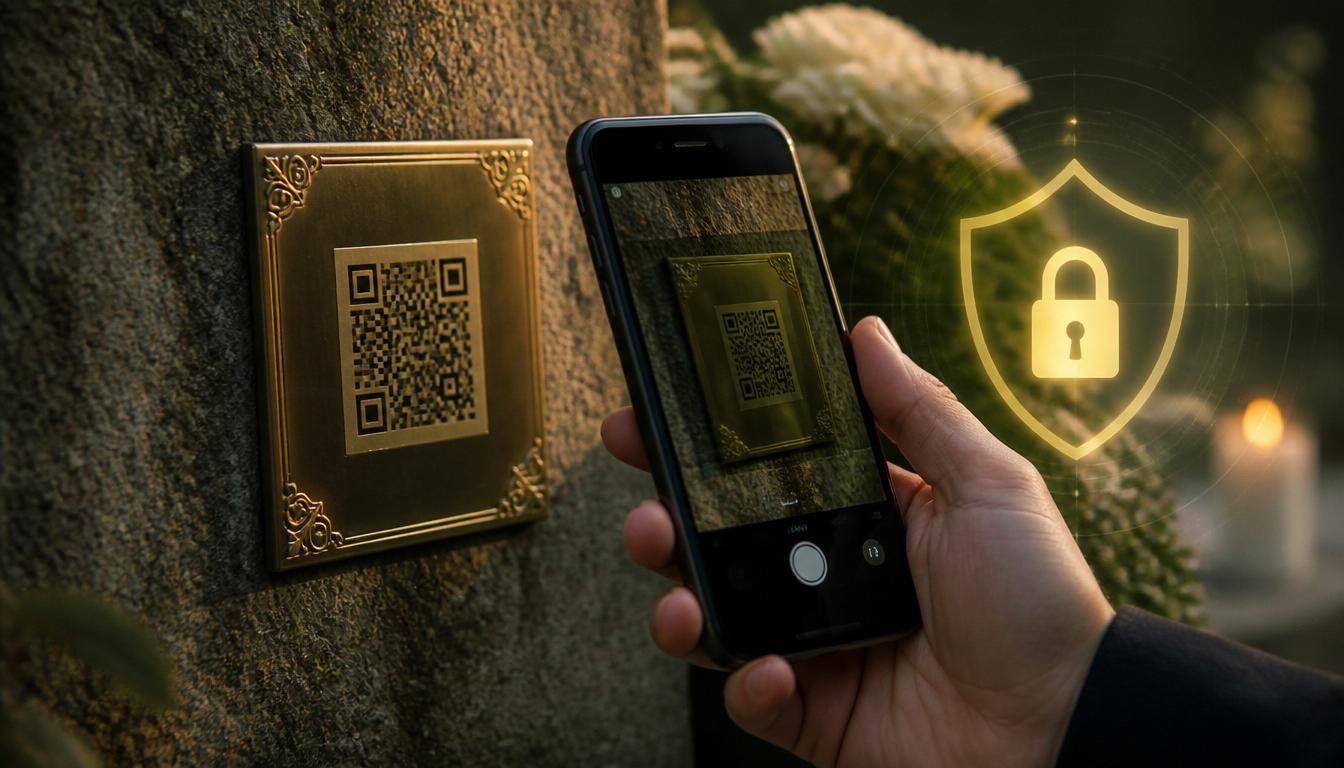
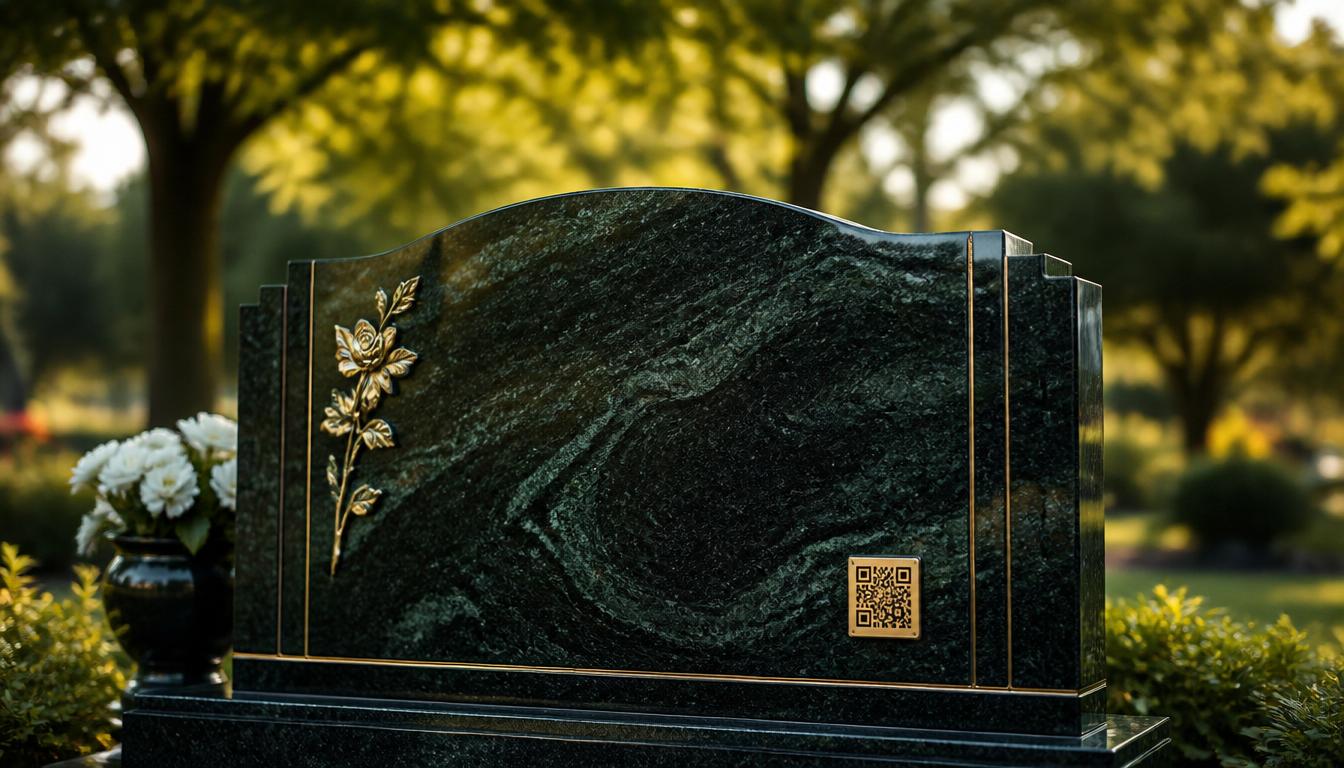
- A physical link back, if there's a grave. Some expat families add a small QR memorial plaque to the headstone, so the online memorial and the physical resting place are connected — a way of visiting, even from a different country, and knowing that everyone else visiting the grave in person sees the same living tribute.
It's okay for this to take longer than you expect
Grief from abroad often runs on its own timeline, partly because the loss keeps resurfacing in new ways — a first visit home afterward, a birthday, an ordinary Tuesday when you'd normally have called. None of that means you're grieving incorrectly. It means the distance adds its own layer, and that layer takes its own time.
If grief feels like it's becoming very hard to carry alone, it's worth speaking to a GP or a bereavement counsellor — many now work over video call specifically because so many families are spread across countries. In the UK, Cruse Bereavement Support offers free grief support by phone and online, wherever you're based.
And if you're looking for a way to keep your loved one's memory close no matter where in the world you are, Vidalem lets you build a free online memorial that your whole family can add to and visit together — a shared place for a life that mattered, regardless of the distance between everyone who loved them.